

SMR Projects Are Advancing in Finland and Across Europe – How Platom Supports Technology Vendors in Licensing and Safety
Small Modular Reactors (SMRs) have been one of the hottest topics in the nuclear industry for years. A defining characteristic of SMRs is their modularity. In practice, this means that the reactor and its key systems are built from standardized, factory-manufactured modules that are transported to the installation site and assembled there. This approach can shorten construction schedules and reduce costs. It also makes investment decisions easier, as investors need to forecast electricity price developments over a shorter period compared with large-scale nuclear power projects.
Modularity offers another important advantage: plant capacity can be increased by adding reactor modules as demand grows. This scalability can further reduce investment risks and allow capacity expansion to be aligned more closely with market needs.
Globally, the number of SMR projects currently under construction can still be counted on one hand, so it is too early to speak of a true SMR boom. However, the number of planned projects is significantly larger, both in Europe and worldwide, as is the number of SMR concepts at various stages of maturity. These concepts include applications ranging from combined heat and power generation to district heating and industrial process heat production. Looking further ahead, the industry is also exploring the possibility of using small reactors as an energy source for ships, supporting the maritime sector’s decarbonization goals.
There are well over one hundred different SMR concepts being developed worldwide. Although demand for reliable, safe, and carbon-free energy generation is strong, it is likely that during the next decade some planned projects will not move forward and many reactor concepts will eventually disappear from the market. In that sense, the industry is currently undergoing a form of SMR “playoffs,” where only the most competitive solutions are expected to succeed.
Turning Challenges and Risks into Competitive Advantages
In both Europe and Finland, the discussion surrounding SMRs has shifted from broad visions toward concrete implementation pathways. Legislative reform is necessary to unlock the full potential of SMRs, but regulatory changes alone will not be enough. There are still significant challenges standing between projects and final investment decisions.
Because only a limited number of projects have progressed to the construction stage, the benefits of modular serial production have not yet been fully demonstrated in practice. Furthermore, the vast majority of reactor designs remain first-of-a-kind (FOAK) projects. From an investor’s perspective, these uncertainties naturally represent considerable risks. At the same time, it is important to remember that light water reactor technology itself has been used successfully around the world for more than half a century.
FOAK risks can also be viewed from another perspective, one that is familiar to Finland. In 2005, Finland became the first country in the world to begin construction of an EPR Generation III+ reactor. The successful commissioning of Olkiluoto 3 in 2023 has provided valuable experience in delivering large and complex nuclear projects under challenging circumstances.
This can be considered a competitive advantage for Finland. The country possesses both expertise and practical experience that increase preparedness to identify, manage, and solve the risks associated with early-stage SMR projects. Successfully overcoming these challenges will further expand Finland’s nuclear knowledge base, creating expertise that can be leveraged when developing products and services for international markets.
For this reason, the industry’s challenges should be viewed above all as opportunities: opportunities to learn, grow, strengthen collaboration, and build new competitive advantages for Finland.
SMR Projects Are Moving into the Next Phase
Despite the risks and challenges described above, significant developments have taken place across Europe over the past year.
In Romania, an investment decision was made in June regarding NuScale’s SMR project. Shortly thereafter, in Sweden, Videberg Kraft announced the selection of Rolls-Royce as its SMR technology supplier. The Swedish state subsequently announced its intention to acquire a majority stake in Videberg Kraft.
In Finland, the reform of the Nuclear Energy Act is approaching completion. At the same time, the cities of Helsinki, Kuopio, Jyväskylä, and Kerava are evaluating whether district heating could in the future be produced using SMR technology, including reactor concepts developed in Finland as well as technologies offered by international vendors.
Europe is therefore taking its first decisive steps toward commercial SMR deployment, and it is encouraging to see both Finland and Sweden at the forefront of this development.
The summer also brought significant changes for Platom.
Platom Is Now Part of Sweco
In June 2026, Sweco acquired the entire share capital of Platom. Platom will become fully integrated into Sweco at the beginning of 2027, while continuing its operations and customer services as before.
Platom brings world-class nuclear expertise to Sweco, covering critical areas related to the safe operation of nuclear facilities, nuclear and radiation safety, licensing, regulatory compliance, and nuclear project execution. We support our clients throughout the entire nuclear lifecycle, from uranium recovery to final disposal.
Nuclear energy and radiation safety specialists will join Sweco’s Industry and Energy division, forming a new business unit focused on Nuclear Energy and Radiation Safety.
What Does Platom Offer?
Platom’s strength in SMR projects lies at the critical interface where international technology vendors encounter the Finnish regulatory and nuclear safety framework.
- Deterministic safety analyses and advanced APROS expertise, enabling dynamic process simulations and safety justifications with the level of accuracy required for regulatory review.
- Preparation of licensing and regulatory inspection documentation, ensuring that engineering solutions are clearly linked to applicable regulatory requirements.
- Nuclear safety design services, addressing both emerging applications and established nuclear safety principles.
- Deep understanding of the Finnish regulatory environment, reducing uncertainties and helping clients navigate the licensing process more efficiently.
In practice, Platom acts as a project’s “translator” and risk mitigator, ensuring smooth alignment between a vendor’s technology and Finnish nuclear safety expectations.
Closing Remarks
One of the most significant characteristics of SMRs is that they are expected to be located closer to populated areas than conventional nuclear power plants. This changes the nature of the discussion. Nuclear energy is no longer something “far away”; it becomes part of everyday life, and the questions people ask become more personal and immediate.
This requires more open dialogue, clearer communication, and above all, genuine engagement with people and communities.
As SMR projects move from planning to implementation, the importance of having the right partner becomes increasingly evident.
Platom helps ensure that technology, safety, and Finnish regulatory requirements come together smoothly and efficiently. As part of Sweco, we are even better positioned to grow alongside our clients’ needs and support increasingly large and demanding projects. At the same time, Platom remains committed to its roots. We will continue to provide agile, locally delivered services for the nuclear and radiation safety sector, combining deep technical expertise with a humble, customer-focused approach.
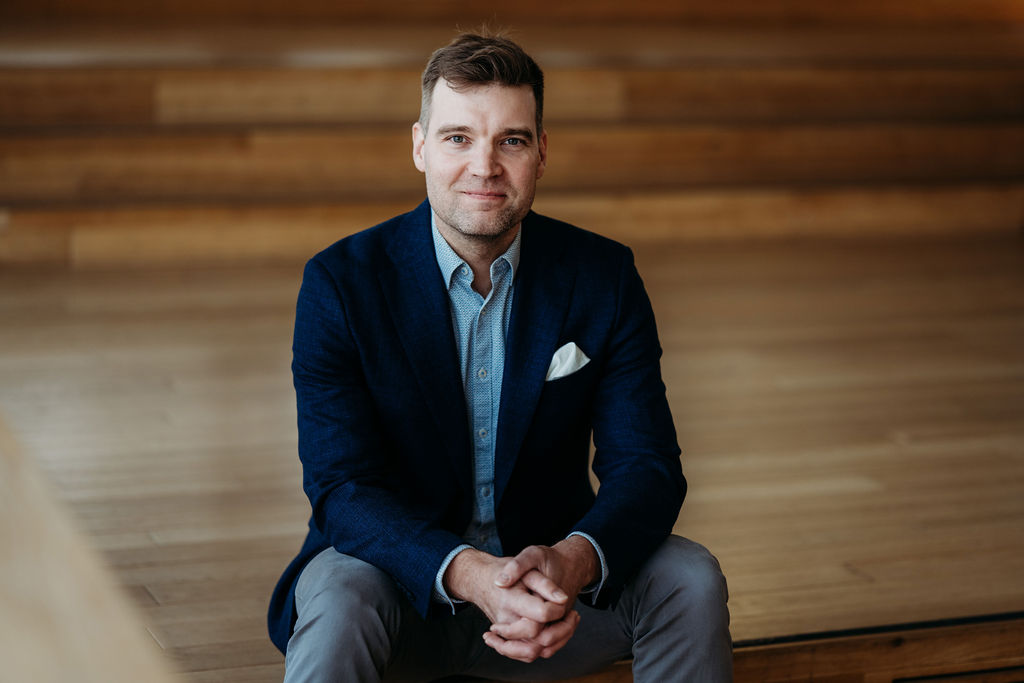
Ariel Aatsinki
Head of Operability